Learn the best option for your high-risk business.
Rolling Reserve vs Upfront Reserve for High-Risk Merchants
In this guide, we dive into the key differences between Rolling Reserves and Upfront Reserves, evaluating their impacts on cash flow, timing, risks, and essential questions to ask before accepting an offer.
21+
Years of Experience
500+
Satisfied Clients
99%
Approval Rate
24/7
Support Availability
Understanding the differences between Rolling Reserve and Upfront Reserve is essential for high-risk merchants looking to manage their cash flow effectively. This guide will break down these concepts into digestible sections.
What Is a Rolling Reserve?
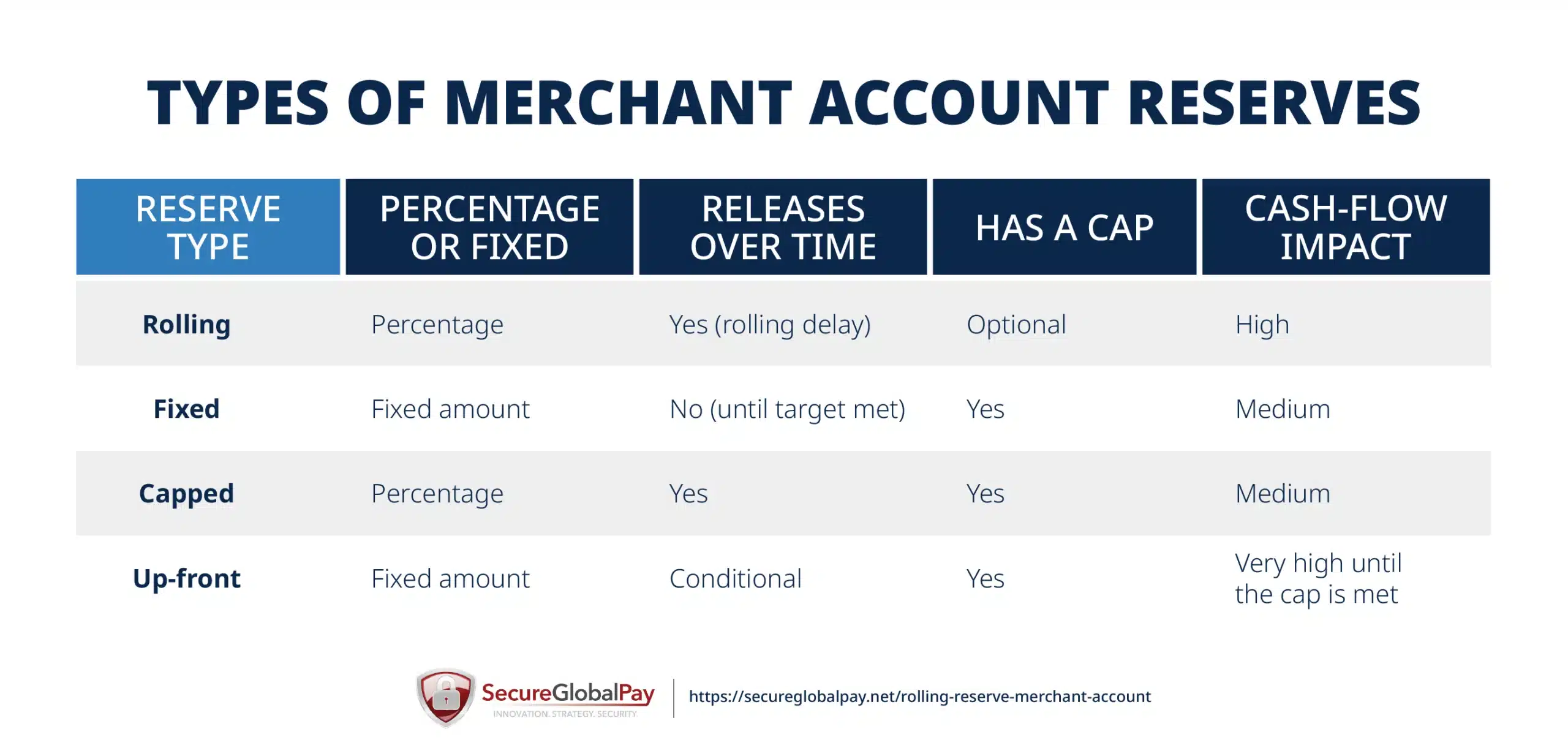
A rolling reserve is a percentage of each transaction that the payment processor retains for a specified period. Typically, this reserve is held to protect the processor against potential chargebacks and fraud. The funds are then released back to the merchant after the predetermined period based on the chargeback history and risk.
What Is an Upfront Reserve?
Unlike the rolling reserve, an upfront reserve takes a set amount from the merchant’s funds at the beginning of the contract. This amount is held as collateral for potential risks associated with the merchant’s business. It is usually released after a fixed time or when the merchant’s risk profile improves.
Knowing the distinctions between these two structures is vital for assessing their impact on your business.
Cash-Flow Effects
The cash-flow implications of choosing between these reserves can significantly affect operating capabilities. For example, rolling reserves may lead to delayed access to funds, especially if the hold periods are long. In contrast, an upfront reserve can immediately impact initial liquidity due to the lump-sum nature but may lead to more predictable cash flow in the long run.
Release Timing
Release timing can vary significantly between the two. Rolling reserves typically release funds in intervals, contingent on a set schedule and contingent upon the absence of chargebacks. On the other hand, upfront reserves have a more fixed release schedule, contingent largely upon the time stipulated in the merchant service agreement.
Risk Exposure
Risk exposure is intrinsic when engaging in high-risk industries. Rolling reserves could lead to significant amounts being withheld depending on transaction volumes and chargeback frequencies. Conversely, an upfront reserve provides the processor with immediate risk coverage but can be financially restrictive for the merchant until released.
Sample Calculations
Let’s consider a merchant who processes $10,000 in transactions monthly. Under a rolling reserve structure, if the processor retains 10% for a three-month tenure, the merchant would have $1,000 tied up at any given time. This amount is only available again after three months without related chargebacks.
In comparison, with an upfront reserve, if the processor also chooses to hold 10% upfront, the merchant would lose $1,000 immediately from working capital. However, this may be released after a stipulated period, say 6 months, allowing the merchant to stabilize their cash flow post initial withdrawal.
Contract Terms
It is essential to scrutinize contract terms governing reserves. Many high-risk service agreements will contain clauses detailing the hold periods, release conditions, and the percentages withheld for reserves. Look for flexibility in terms provided by the processor, since unfavorable terms may exacerbate cash flow difficulties.
Questions Merchants Should Ask Before Accepting an Offer
- What percentage will be held for reserves?
- How long will my funds be tied up?
- Under what conditions can I expect the reserves to be released?
- How does the processor handle chargebacks relevant to rolling reserves?
- Are there any fees associated with the reserve structure?
- Can I negotiate terms regarding my specific business risk?
Conclusion
Deciding between a rolling reserve and an upfront reserve is crucial for managing cash flow amidst potential risks for high-risk merchants. Understanding the differentiators in structure, cash-flow effects, timing, risk exposure, and important questions to ask will enable you to make informed decisions. To explore tailored solutions for your high-risk business, apply now or reach out for further assistance.
Why Trust High Wire Payments?
Our commitment to high-risk merchants ensures you receive optimal support when navigating payment challenges.
Experienced Team
Our experts understand the complexities of high-risk transactions.
Tailored Solutions
We provide personalized payment solutions to fit your needs.
24/7 Support
We are here for you around the clock to assist with your inquiries.
Flexible Contract Terms
Our contracts are designed to adapt to your business’s dynamics.
Secure Transactions
We prioritize the security of your transactions and client data.
Strong Industry Reputation
We have built a reliable brand in the high-risk merchant space.
What is a rolling reserve?
A rolling reserve is a portion of each transaction that the payment processor holds as security against potential chargebacks.
How long does a rolling reserve last?
The usual duration can range from a few months to up to six months depending on the risk profile of the business.
What happens if I have multiple chargebacks?
Multiple chargebacks can extend the duration of the hold on your rolling reserves, potentially affecting your cash flow.
How can I release an upfront reserve?
Upfront reserves are generally released based on the contract terms after a fixed duration or meeting specific performance criteria.
Can I negotiate my reserve terms?
Yes, it is advisable to negotiate the terms based on your unique business profile and risk level.
What if my business has low risk?
Businesses with lower chargeback rates may negotiate for lower reserve percentages or even avoid reserves.
Ready to Optimize Your Payment Solution?
Join many satisfied clients by opting for a tailored payment solution designed for your business needs.